NEED A SATURDAY APPOINTMENT?
We are Open on Saturdays. (Consultations & surgery offered)
Call us today to book your appointment!
We are Open on Saturdays. (Consultations & surgery offered)
Call us today to book your appointment!
 Mon - Fri: 8:00AM - 5:00PM
Cutting-edge treatments for lipedema

Conservative (Non-Surgical) Treatments focus on managing symptoms, reducing swelling, and preventing progression. While they do not eliminate lipedemic fat, they can significantly slow progression and improve quality of life.

Water-Assisted Liposuction (WAL) is the workhorse and the gold standard of care in gentle liposuction techniques, using a fan-shaped, high-pressure jet of saline solution to dislodge fat cells before they are suctioned out.
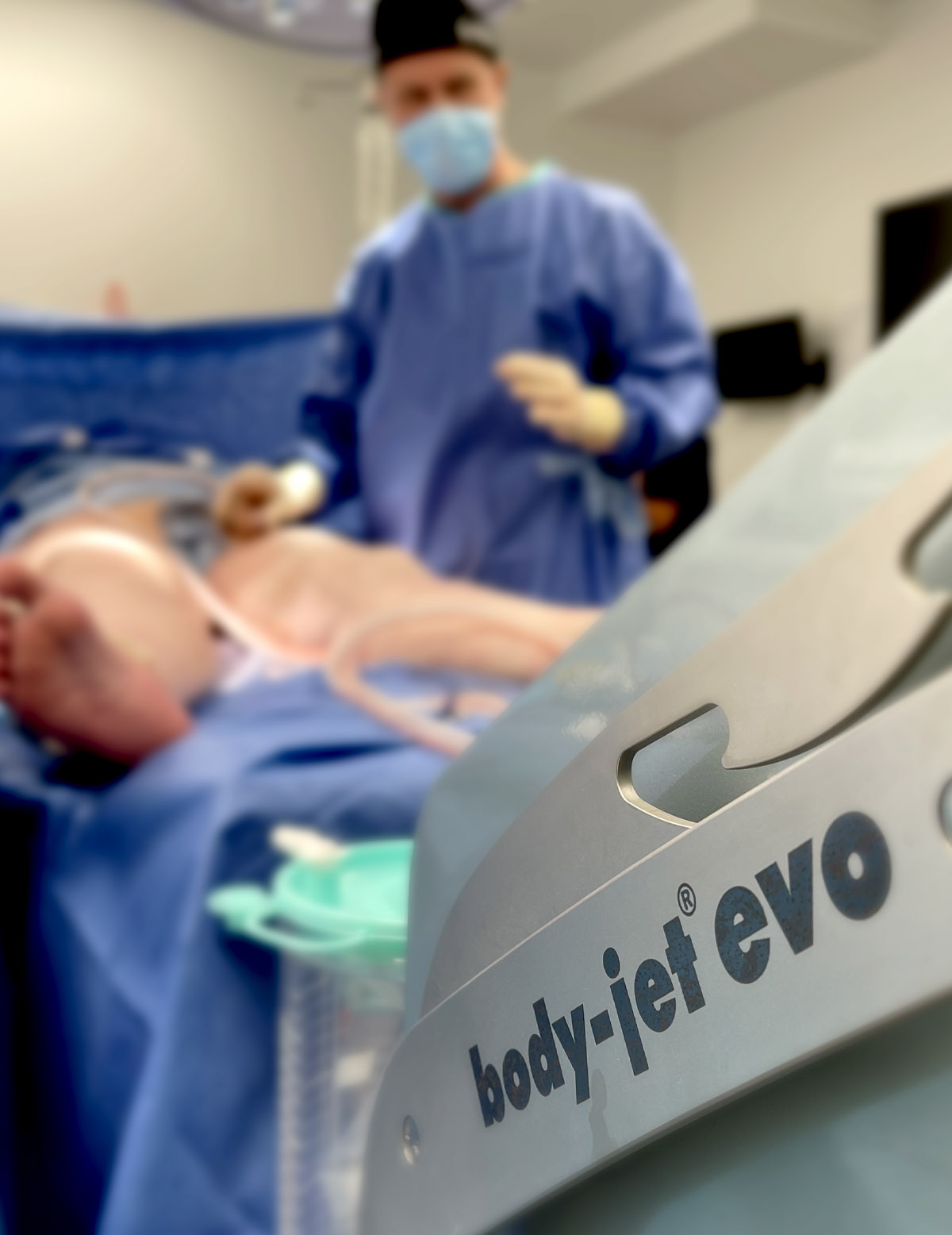
Power-Assisted Liposuction (PAL) is a surgical technique that uses a vibrating cannula to break up fatty tissue for easier removal, making it effective for treating the fibrous fat deposits in lipedema.
PAL can offer more precise and thorough fat removal, potentially leading to better cosmetic outcomes and a significant improvement in symptoms like pain, heaviness, and swelling compared to traditional liposuction.

Lipedema Liposuction Surgery is not a cure, and patients must continue with eating a healthy diet and exercise.
J-Plasma (Renuvion) is an optional, effective, and minimally invasive technology used immediately after liposuction to tighten skin by delivering cold helium plasma and radiofrequency energy to the tissues. It is ideal for reducing laxity in areas like the thighs, arms, or abdomen, leading to a firmer, more sculpted result.
J-Plasma (Renuvion) is one of the most talked-about skin tightening treatments in the Lipedema right now. It uses a combination of radio frequency energy and helium gas to create a plasma beam that tightens the skin from the inside. The treatment is performed through the same small incisions used during liposuction, so there are no additional scars.


Key benefits of the surgery include:

Dr. Edouard Coeugniet, MSc. will consider your goals to determine which technique will most benefit you and whether additional procedures will be necessary to achieve your desired results. He will also discuss topics like; How much fat can be removed safely in 1 session during Lipedema Liposuction, what is expected recovery time, possible risks, and any associated limitations. You will discuss costs and scheduling options with the doctor’s patient coordinator.


Lipedema is believed to have a genetic and hormonal link. It almost exclusively affects women and often begins or worsens during times of hormonal change, such as puberty, pregnancy, or menopause.
Lipedema develops in stages.The level of pain, tenderness, swelling and fat accumulation may increase over time. The image below provides an overview of the four stages of Lipedema, showing the location of fat build up and resulting body shape at each stage. Depending on the person, different parts of the body can be affected in different ways at each stage.
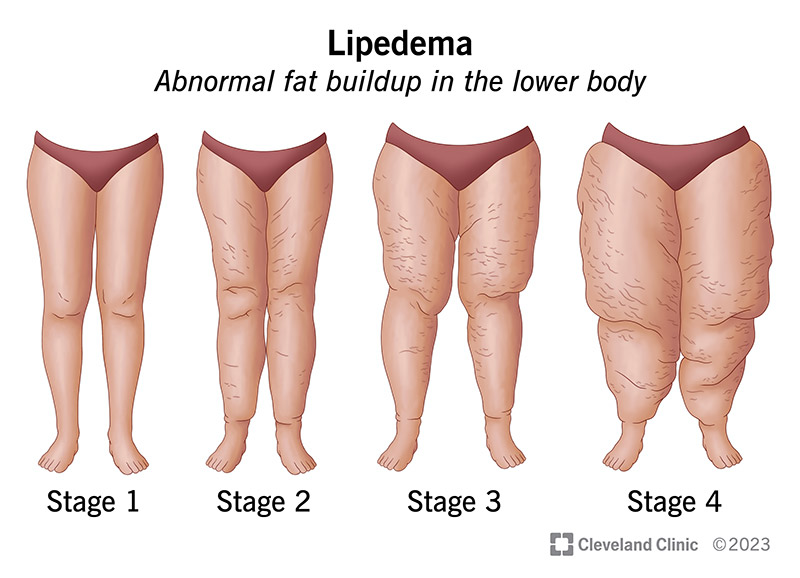
This staging criteria, although often used, does not take into consideration pain, size, impact on joints, loss of mobility, or other impacts to quality of life. Other criteria are sometimes used.
Lipedema is a chronic, painful condition of abnormal fat buildup, primarily affecting the legs symmetrically and sparing the hands and feet, while lymphedema is caused by a blockage in the lymphatic system that leads to fluid accumulation and can be asymmetrical, affecting various body parts including hands and feet. Lipedema is linked to genetics and possibly hormones, whereas lymphedema can be primary (inherited) or secondary (caused by surgery, trauma, or cancer treatment).
If you think you have lipedema, you should see a doctor for a diagnosis and to get a referral to a specialist if needed. Be prepared to discuss your symptoms, medical history, and any family history of the condition, as early diagnosis is important to start management and prevent complications.
Water Assisted Liposuction (WAL) is an advanced, minimally invasive technique that uses a gentle water-jet stream to loosen and remove fat deposits. Unlike traditional liposuction, which can be more invasive and traumatic, WAL:
Lipedema fat is fibrotic and challenging to remove using traditional methods. Water jet-assisted liposuction for lipedema specifically targets these stubborn fat deposits while preserving healthy tissues. Benefits include:
While traditional liposuction is effective for general fat removal, it may not be suitable for lipedema due to the condition’s unique challenges. In contrast, water-assisted liposuction offers:
Recovery from Water-Assisted (WAL) liposuction involves several stages, with patients typically able to return to desk jobs in about a week, while strenuous activity should be avoided for at least 4 to 6 weeks. Full recovery, with most swelling and bruising gone, can take several months, although intermittent swelling may last for up to six months or longer.
Yes, WAL (Water-Assisted Liposuction) liposuction will leave very small, minimal scars because the procedure requires small incisions to insert the cannula. However, scars from WAL are generally discreet and less noticeable than those from other surgical procedures because the incisions are very small. The final appearance of the scars depends on the skill of the surgeon and individual healing.
The best diet for lipedema involves reducing inflammation and managing symptoms through a low-carbohydrate, whole-foods approach, with potential benefits from a ketogenic diet. Key recommendations include consuming plenty of non-starchy vegetables, lean proteins like fish, and healthy fats, while limiting sugar, refined grains, high-salt foods, and processed items. Consulting a doctor or registered dietitian is crucial to create an individualized plan that considers your specific health needs and ensures you receive adequate nutrition.
State-of-the-art solutions designed to reduce tissue sensitivity and restore your mobility.
 info@lipoedememontreal.ca